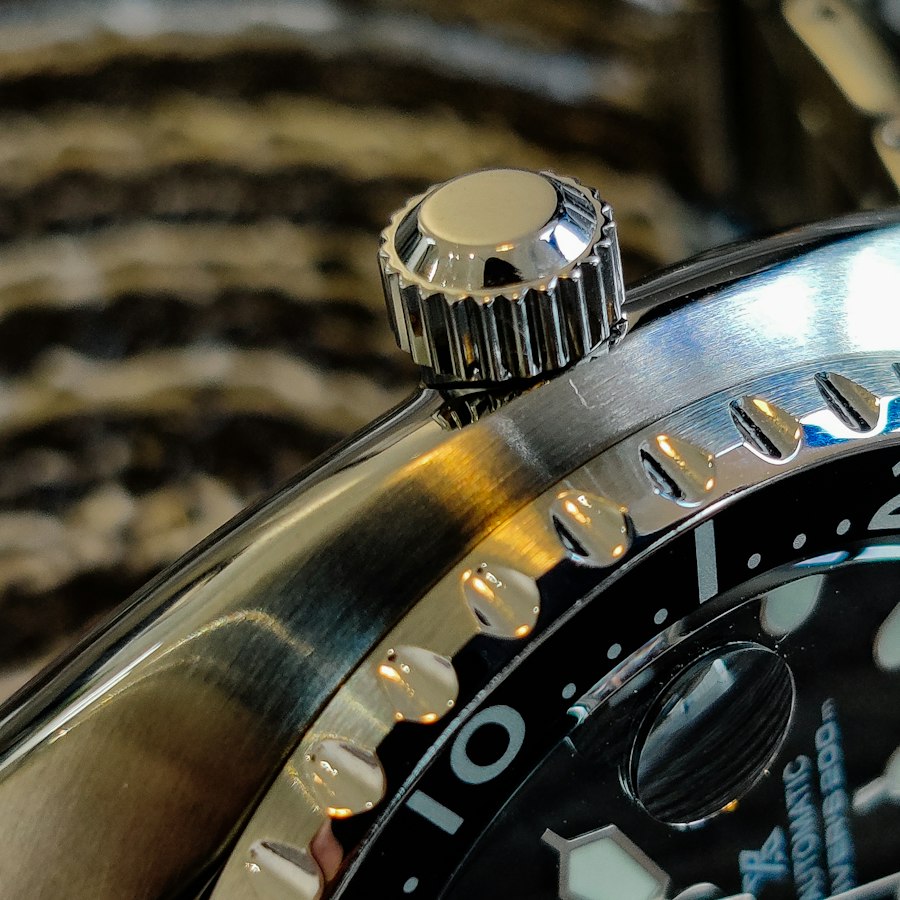
Buying a first serious watch without the logo deciding
The opening chapters give you a way to inspect the physical object first: crown, clasp, dial, dimensions, movement and seller evidence.
A first-watch handbook by Frank Mercier
Before you pay, inspect the crown, bezel, bracelet, dial, papers and serials, and choose movement, fit and seller for the life you actually lead.
The Sixty-Second Bench Test · Sound on
Frank explains what to inspect before you pay, in 3 minutes.
The Counter Shelf
01A first serious watch can look straightforward at the counter. The trouble usually begins when the logo answers questions that the case, movement, fit and seller should answer first.
“The dial sells it. The movement keeps it. Your wrist decides whether you will wear it.”
— Frank Mercier
PDF + EPUB
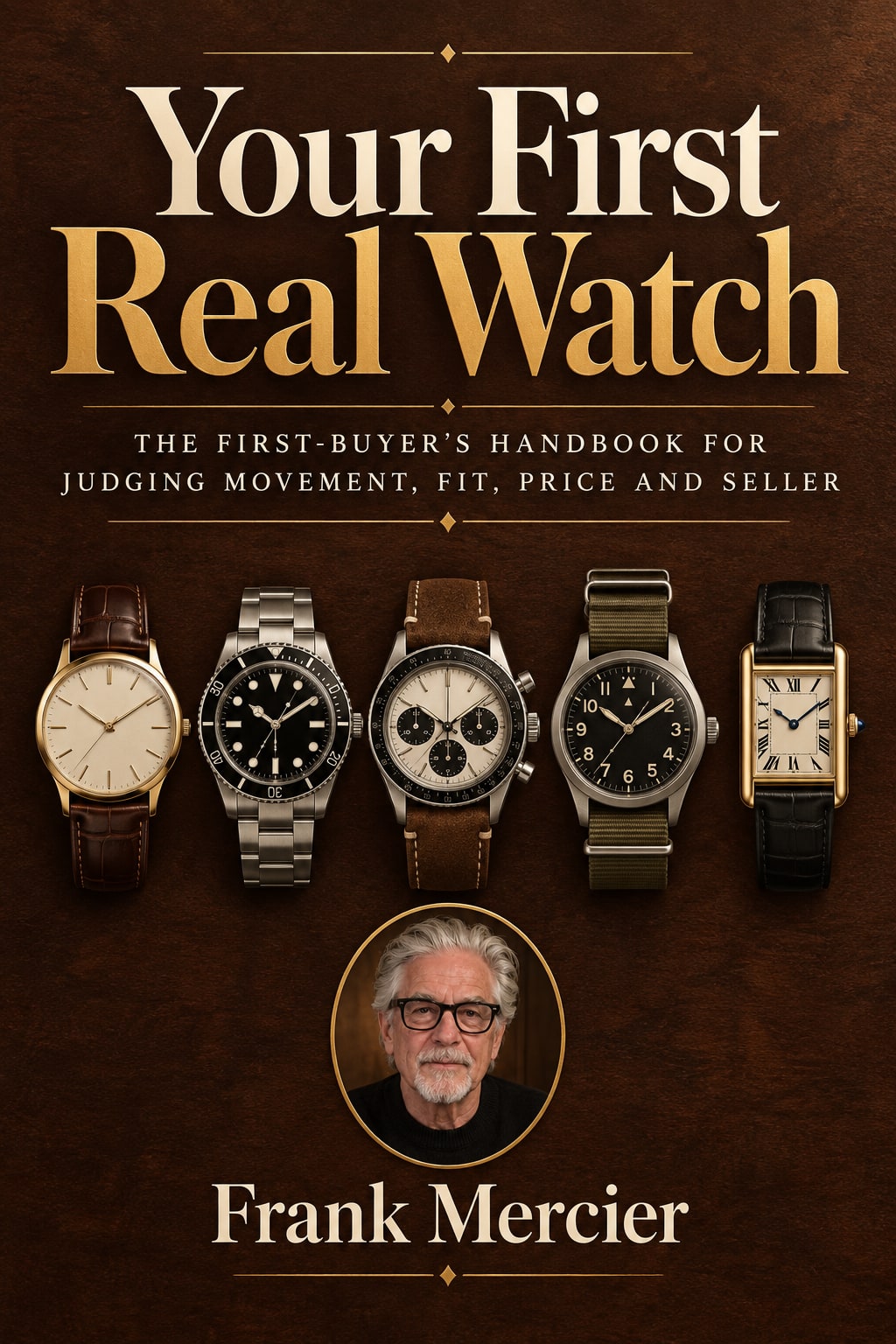
The book
02The First-Buyer's Handbook for Judging Movement, Fit, Price and Seller
Your first serious watch shouldn't be chosen by the dial alone. In this 124-page, 12-chapter handbook, Frank Mercier shows a first-time buyer how to inspect construction, fit, movement, seller evidence and the cost of owning the watch.
Start with Why the First Watch Goes Wrong, then use The Sixty-Second Bench Test to check the crown, bezel, bracelet, dial, papers and serials. Fit First turns wrist measurements, lug-to-lug length, thickness and cuff clearance into a decision. Later chapters compare quartz, automatic and hand-wound movements, examine the $300 to $3,000 range, cover pre-owned buying and build a practical three-watch wardrobe.
PDF + EPUB
Selected chapters
03Read straight through or open the chapter that matches the decision in front of you. Each one puts a physical check ahead of the story told by the dial.
Separate famous from better, automatic from superior, size from value and appreciation from wishful thinking. Then note which of the four common first-purchase errors is most likely to affect your shortlist.
The complete inspection at a counter: crown, bezel, bracelet, dial under magnification, then papers and serials. Mark pass, caution or stop before the seller's presentation makes the decision for you.
Score three candidates without their brand names. Restore the names only after you've checked fit, movement, seller evidence, return terms and the total cost of owning each watch.
PDF + EPUB
Look inside
04Ten pages from the book, with the diagrams and checklists you'll take to the counter. Tap a page to read it full size.
All 124 pages, PDF + EPUB
What you get
Secure checkout processed by Whop.

This is for you if
05PDF + EPUB
What you can work toward
06The opening chapters give you a way to inspect the physical object first: crown, clasp, dial, dimensions, movement and seller evidence.

Compare quartz, automatic and hand-wound choices by accuracy, resetting, shock tolerance, power reserve and willingness to pay for service.
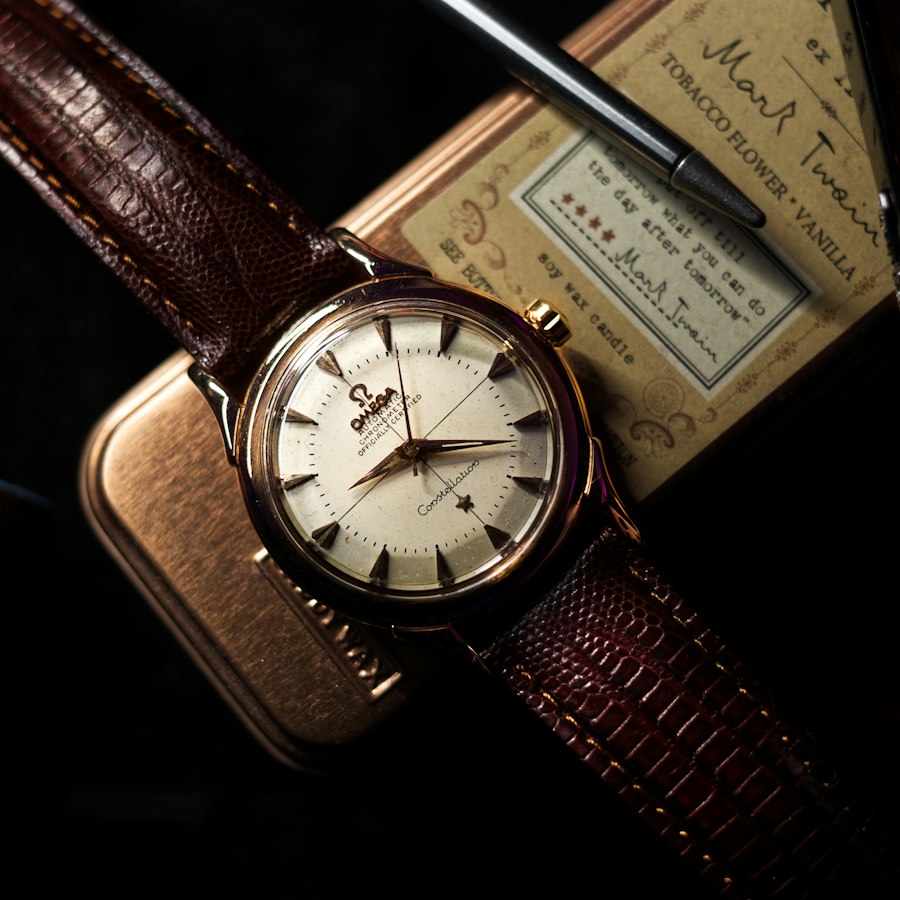
Ask about polishing, missing links, replaced parts, service invoices, serials, payment protection and insured shipping before money changes hands.
PDF + EPUB
The Counter Shelf
Twelve chapters in the order you'll need them: why first watches go wrong, the Sixty-Second Bench Test, fit, movement choice, what the movement tells you, price tiers, fashion and microbrands, where to buy, ownership costs, pre-owned buying, the three-watch wardrobe and a final shortlist worksheet.
It's written for a first serious watch buyer, but the method is useful whenever you want to slow down a purchase and inspect the object before the reputation. The movement chapters explain quartz, mechanical, automatic, hand-wound, power reserve, frequency, jewels and accuracy in plain language.
The book's repeatable inspection of the crown, bezel, bracelet, dial, papers and serials. Photographic pass-and-fail examples show normal tolerances and the faults that justify stopping the purchase.
Yes. Fit First: Wrist, Lugs and Cuffs covers wrist circumference, usable wrist-top width, case diameter, lug-to-lug length, thickness, weight, bracelet articulation, cuff clearance and an at-home paper template.
Yes. Quartz, Automatic or Hand-Wound? matches accuracy, power reserve, resetting, shock tolerance, battery needs and service obligations to real wearing habits. What the Movement Really Tells You then looks beneath the display at finishing, regulation, parts access and repairability.
Yes. Boutique, Dealer, Grey Market or Private Seller? compares access, warranty, authentication and recourse across sales channels. Buying Pre-Owned Without Buying Trouble covers seller history, replaced parts, polished cases, missing links, service claims, payment protection and insured shipping.
Yes. What $300 to $3,000 Actually Buys examines cases, crystals, bracelets, movements, regulation, warranties and the point where refinement may give way to recognition.
PDF and EPUB. You get both, right after checkout.
If you're at the beginning of a first serious watch purchase, start with the case in front of you rather than the name on the dial. Open the book, run the checks and choose with your wrist, routine and years of ownership in mind.
Get the book · $27 →